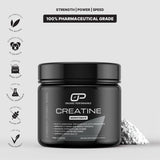










Creatine is widely recognised for its benefits in strength, power, and muscle performance — but growing research now highlights its role in brain health, cognition, and mental fatigue resistance.
As interest in creatine expands beyond the gym, one of the most common questions people ask is:
How much creatine should you take for brain health?
In this article, we break down what the latest research says about creatine dosing for cognitive support, who benefits most, and how to use creatine safely and effectively for the brain.
Why the Brain Needs Creatine
The brain is one of the most energy-demanding organs in the body, using around 20% of total daily energy despite accounting for only ~2% of body weight.
Creatine supports the brain by:
-
Acting as an energy buffer via the phosphocreatine system
-
Helping regenerate ATP during high cognitive demand
-
Supporting neuronal signalling and metabolic resilience
Under conditions such as mental stress, sleep deprivation, intense training, or caloric restriction, brain energy availability can become a limiting factor — which is where creatine may help.
What Does the Research Say About Creatine and Brain Health?
Human studies investigating creatine and cognition have shown benefits in specific contexts, including:
-
Improved working memory and reasoning (especially in individuals with lower baseline creatine intake, such as vegetarians)
-
Reduced mental fatigue during prolonged cognitive tasks
-
Preservation of cognitive performance during sleep deprivation and stress
A landmark double-blind study published in Proceedings of the Royal Society B demonstrated significant improvements in working memory and intelligence test performance following creatine supplementation.
More recent research (2020–2024) has continued to support creatine’s role in:
-
Brain energy metabolism
-
Cognitive resilience under stress
-
Mental performance when ATP demand is elevated
Importantly, creatine does not act as a stimulant — it supports energy availability at the cellular level.
How Much Creatine Should You Take for Brain Health?
Evidence-Based Creatine Dosage
Most studies examining cognitive or neurological outcomes use doses similar to physical performance research:
-
3–5 grams of creatine monohydrate per day
-
Taken consistently
-
No loading phase required
This dose has been shown to safely increase creatine availability in both muscle and brain tissue over time.
Why Consistency Matters More Than Timing
Creatine accumulates gradually in tissues. Brain creatine levels rise over weeks, not hours — which means:
-
Daily intake is more important than timing
-
Benefits are subtle and cumulative
-
Missing occasional doses matters less than long-term consistency
Creatine can be taken:
-
In the morning
-
Pre-training
-
Post-training
-
With or without food
There is no strong evidence that timing affects brain uptake — only consistency does.
Who May Benefit Most From Creatine for Brain Health?
Research suggests creatine’s cognitive benefits are most noticeable in people with higher energy demands or lower baseline creatine stores, including:
-
People experiencing mental fatigue or brain fog
-
Athletes combining physical and cognitive stress
-
Individuals under chronic stress or poor sleep
-
Vegetarians and vegans (lower dietary creatine intake)
-
Students and professionals in high-cognitive-load environments
For these groups, creatine may help support:
-
Focus and concentration
-
Mental stamina
-
Cognitive resilience during stress
Is Higher Creatine Dosing Better for the Brain?
Some neurological studies have explored higher doses (10–20g/day) in clinical or experimental settings. However:
-
These doses are typically short-term
-
Used under medical supervision
-
Not necessary for general brain health support
For healthy individuals, 3–5g per day remains the most evidence-based, safe, and effective dose.
More is not better — consistency is.
Is Creatine Safe for Brain Health?
Creatine is one of the most researched supplements globally, with decades of safety data.
Large systematic reviews and position statements consistently show:
-
No negative effects on brain health
-
No impairment of cognitive function
-
No increased neurological risk in healthy individuals
In fact, research interest in creatine continues to grow specifically because of its potential neuroprotective and energy-supporting properties.
Creatine for Brain Health vs Stimulants
Unlike caffeine or nootropics that force neurotransmitter release, creatine:
-
Supports energy availability
-
Does not cause jitters or crashes
-
Does not disrupt sleep when taken earlier in the day
-
Works in the background rather than acutely
This makes creatine a foundational supplement, not a quick fix.
Final Thoughts: Creatine as a Brain Energy Nutrient
The latest research makes one thing clear: creatine is not just a muscle supplement.
By supporting ATP regeneration in brain cells, consistent creatine intake may help:
-
Reduce mental fatigue
-
Support focus under stress
-
Improve cognitive resilience over time
If you’re looking to support brain health naturally — without stimulants — 3–5g of creatine monohydrate daily is the most practical, evidence-based approach.