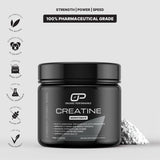









Creatine is best known for its role in strength, power, and muscle performance — but over the last decade, research has increasingly explored creatine’s role in brain health. Emerging evidence suggests creatine may support cognitive performance, mental fatigue resistance, and neurological resilience, especially under stress, sleep deprivation, or high cognitive demand.
In this article, we explore how creatine works in the brain, what the science says about cognition and mental performance, and who may benefit most.
What Is Creatine and How Does It Work in the Brain?
Creatine is a naturally occurring compound made from the amino acids glycine, arginine, and methionine. Around 95% of creatine is stored in skeletal muscle, but the remaining 5% is found in the brain, heart, and other tissues with high energy demand.
In the brain, creatine plays a critical role in:
-
ATP regeneration (cellular energy)
-
Neuronal signalling efficiency
-
Energy buffering during high cognitive demand
The brain consumes roughly 20% of the body’s total energy, despite accounting for only ~2% of body weight. When mental demand increases — such as during intense focus, stress, or sleep deprivation — brain ATP availability becomes a limiting factor.
Creatine acts as an energy reserve, helping maintain ATP levels when demand spikes.
Creatine and Cognitive Performance
Does Creatine Improve Memory and Focus?
Several human studies suggest creatine supplementation may improve certain aspects of cognitive function, particularly in situations where brain energy availability is challenged.
Key findings from the literature include:
-
Improved working memory and intelligence test performance in vegetarians and individuals with lower baseline creatine intake
-
Enhanced reaction time and information processing speed during mentally demanding tasks
-
Reduced mental fatigue during prolonged cognitive testing
A well-cited double-blind study published in Proceedings of the Royal Society B found that creatine supplementation significantly improved working memory and reasoning ability, particularly in populations with lower dietary creatine intake.
The proposed mechanism is simple: greater phosphocreatine availability supports faster ATP regeneration in neurons.
Creatine and Mental Fatigue
Mental fatigue isn’t just “feeling tired” — it’s a measurable decline in cognitive output, reaction time, and decision-making accuracy.
Research suggests creatine may:
-
Reduce mental fatigue during prolonged cognitive tasks
-
Maintain performance during sleep deprivation
-
Support cognitive resilience during stress
A 2022–2024 body of research examining creatine under stress conditions (including sleep restriction and hypoxia) has shown that creatine helps preserve executive function and reaction time, likely due to improved cellular energy buffering.
This has particular relevance for:
-
Athletes
-
Shift workers
-
Students
-
High-stress professionals
Creatine and Neuroprotection
Beyond performance, creatine has been studied for its neuroprotective properties.
Preclinical and early human research indicates creatine may:
-
Reduce oxidative stress in neural tissue
-
Support mitochondrial function
-
Improve cellular resilience during metabolic stress
Creatine has been investigated in neurological conditions such as:
-
Parkinson’s disease
-
Huntington’s disease
-
Traumatic brain injury (TBI)
While results in clinical populations are mixed (and creatine is not a treatment), the consistent theme is that creatine supports brain energy metabolism, which is foundational to neurological health.
Who May Benefit Most from Creatine for Brain Health?
Creatine appears most beneficial for cognitive support in individuals with higher energy demand or lower baseline creatine stores, including:
-
People under chronic mental stress
-
Individuals experiencing mental fatigue or “brain fog”
-
Vegetarians and vegans (lower dietary creatine intake)
-
Athletes combining physical and cognitive stress
-
People with poor sleep or irregular schedules
Importantly, creatine does not act as a stimulant. It supports brain energy availability rather than forcing neurotransmitter release, which means no crash, jitters, or dependency.
How Much Creatine for Brain Health?
Most cognitive studies use doses similar to physical performance research:
-
3–5g of creatine monohydrate daily
-
No loading phase required
-
Consistency matters more than timing
Creatine crosses the blood–brain barrier gradually, so benefits accumulate over weeks rather than hours.
Creatine can be taken:
-
In the morning
-
Pre-training
-
Post-training
-
With or without food
Daily intake is the key factor.
Is Creatine Safe for the Brain?
Creatine is one of the most extensively studied supplements in the world. Large-scale reviews and position stands from international sports and nutrition bodies consistently report that creatine is safe when consumed at recommended doses in healthy individuals.
No evidence suggests creatine harms brain function. In fact, research trends increasingly point in the opposite direction — supporting brain energy metabolism and resilience.
Creatine Beyond Muscle: A Brain Performance Nutrient
Creatine is no longer just a “gym supplement.” It’s increasingly recognised as a foundational energy molecule that supports both physical and cognitive performance.
By improving ATP availability in neurons, creatine may:
-
Enhance mental clarity
-
Reduce cognitive fatigue
-
Support focus under stress
-
Complement physical training demands
For athletes and high performers, this makes creatine one of the rare supplements that benefits both body and brain.
Final Thoughts
The emerging science is clear: creatine plays a meaningful role in brain energy metabolism.
While it’s not a magic pill for intelligence or memory, consistent creatine supplementation can support:
-
Cognitive performance under load
-
Mental fatigue resistance
-
Overall brain energy availability
In a world of constant mental and physical stress, creatine stands out as a simple, evidence-backed tool for whole-body performance.