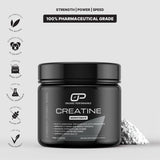










Creatine has long been associated with strength, power, and muscle performance — but in recent years, scientific interest has expanded into a new area: brain function.
As more research emerges, creatine is increasingly recognised not just as a sports supplement, but as a compound that may support cognition, mental fatigue resistance, and brain energy metabolism.
So what does the science actually say?
Does creatine improve brain function — or is it just hype?
Let’s break it down.
How the Brain Uses Energy (and Where Creatine Fits In)
The brain is one of the most energy-hungry organs in the body, consuming roughly 20% of total daily energy despite making up only about 2% of body weight.
Brain cells rely on ATP (adenosine triphosphate) to:
-
Transmit nerve signals
-
Maintain focus and reaction speed
-
Support memory and learning
-
Regulate mood and decision-making
Creatine plays a key role in this process by acting as an energy buffer. Through the phosphocreatine system, creatine helps rapidly regenerate ATP when energy demand increases — such as during intense thinking, stress, or sleep deprivation.
In short:
👉 Creatine helps the brain maintain energy when demand is high.
Does Creatine Improve Cognitive Performance?
What Human Studies Show
Several controlled human studies have examined creatine’s effects on cognition, particularly under conditions of increased mental demand.
Research findings suggest creatine supplementation may:
-
Improve working memory
-
Enhance reasoning and problem-solving
-
Improve reaction time and information processing
-
Reduce mental fatigue during prolonged cognitive tasks
One of the most frequently cited studies, published in Proceedings of the Royal Society B, found that creatine supplementation significantly improved working memory and intelligence test performance, particularly in individuals with lower baseline creatine levels.
More recent studies (2020–2024) have reinforced these findings, especially in scenarios involving:
-
Sleep deprivation
-
Cognitive stress
-
High mental workload
Creatine does not appear to “boost intelligence” outright — rather, it helps preserve cognitive performance when the brain is under strain.
Creatine and Mental Fatigue
Mental fatigue occurs when the brain struggles to meet ongoing energy demands. This can show up as:
-
Brain fog
-
Slower thinking
-
Poor concentration
-
Reduced decision-making accuracy
Multiple studies have shown that creatine supplementation can help attenuate mental fatigue, particularly during long or demanding cognitive tasks.
This effect is believed to be driven by improved ATP availability in neurons, allowing the brain to sustain performance for longer periods without decline.
This is especially relevant for:
-
Athletes under physical + mental stress
-
Students during exam periods
-
Shift workers
-
Professionals in high-pressure roles
Who Is Most Likely to Benefit Cognitively from Creatine?
Creatine’s effects on brain function are not identical for everyone. Benefits appear to be most pronounced in people with higher cognitive energy demands or lower baseline creatine levels, including:
-
Vegetarians and vegans (lower dietary creatine intake)
-
People experiencing chronic mental fatigue or brain fog
-
Individuals under prolonged stress
-
Athletes balancing heavy training and work demands
-
People with disrupted sleep patterns
In individuals who already have high baseline brain creatine levels, improvements may be more subtle — but creatine still supports brain energy resilience.
Creatine Is Not a Stimulant (And That Matters)
Unlike caffeine or nootropic stimulants, creatine:
-
Does not force neurotransmitter release
-
Does not increase heart rate or anxiety
-
Does not cause crashes
-
Does not disrupt sleep when taken earlier in the day
Instead, creatine works behind the scenes, supporting cellular energy availability rather than overstimulating the nervous system.
This makes creatine particularly appealing for people looking to improve mental performance without reliance on stimulants.
Creatine and Long-Term Brain Health
Beyond short-term cognitive performance, creatine has been investigated for its potential role in neuroprotection and brain resilience.
Preclinical and early human research suggests creatine may:
-
Support mitochondrial function in brain cells
-
Reduce oxidative stress
-
Improve cellular resistance to metabolic stress
Creatine has been studied in neurological contexts such as traumatic brain injury, Parkinson’s disease, and Huntington’s disease. While findings are mixed and creatine is not a medical treatment, the consistent theme is its role in supporting brain energy metabolism, which is foundational to brain health.
How Much Creatine Is Needed for Brain Function?
Most studies examining brain and cognitive outcomes use the same dosage range as physical performance research:
-
3–5 grams of creatine monohydrate per day
-
Taken consistently
-
No loading phase required
Creatine crosses the blood–brain barrier gradually, meaning benefits accumulate over time rather than appearing immediately.
Consistency matters far more than timing.
Final Verdict: Does Creatine Improve Brain Function?
Based on current evidence:
✅ Creatine supports brain energy metabolism
✅ It can improve or preserve cognitive performance under stress
✅ It may reduce mental fatigue
✅ It is safe, well-researched, and non-stimulatory
Creatine is not a quick fix or a cognitive enhancer in the stimulant sense — but it is a foundational brain energy nutrient that supports performance when the brain is under load.
For athletes, high performers, and anyone managing physical and mental stress, creatine offers benefits that extend well beyond muscle.